Home  /  Governance

Board of Directors

The Ethics of AI Institute is governed by its Board of Directors according to the organization's charter.

Read the charter (PDF) →
Matthew S.W. Silk
Executive Director

Matthew S.W. Silk

Mount Allison University

Dr. Matt Silk is an Assistant Professor of Philosophy and the founding director of the Institute. He completed his PhD in philosophy at Waterloo and co-authored An Inquirer's Guide to Ethics in AI (Broadview Press). His work focuses on responsibility and inductive risk in emerging technologies, and he hosts the Ethics of AI Podcast.

More about Matt →

Samantha St. Amand
Secretary / Treasurer

Samantha St. Amand

University of Waterloo

Samantha St. Amand serves as Secretary/Treasurer on the Board of Governors of the Ethics of AI Institute. She is a Data Scientist at the University of Waterloo, with over a decade of experience in data analytics and statistical modelling. Her background in economics, global governance research, and institutional data integration informs her commitment to multi-disciplinary, evidence-based evaluation of the societal implications of emerging technologies.

Samantha holds an MA in Economics from the University of Waterloo, a BA in Economics from Wilfrid Laurier University, a BA in French Studies from the University of Waterloo, and is currently pursuing an MMSc in Management of Technology at the University of Waterloo, deepening her focus on the intersection of technology, governance, and responsible innovation.

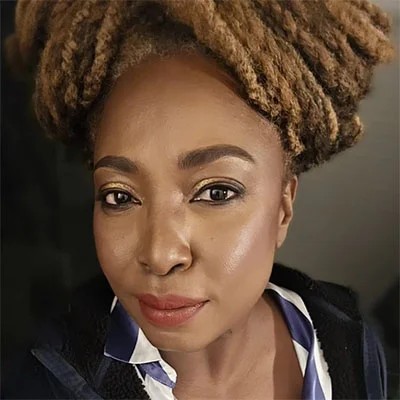
Kem-Laurin Lubin
Director-at-large

Kem-Laurin Lubin

University of Waterloo

Dr. Kem-Laurin Lubin is a rhetorician of technology whose research examines how artificial intelligence systems characterize the people they act upon, a process her dissertation named algorithmic ethopoeia, and how people can be taught to read and answer that characterization. She holds a PhD from the University of Waterloo (2025) and spent nearly two decades in the technology industry as a human-centred design researcher, design leader, and certified design thinking coach before returning to the academy.

She is the author of User Experience in the Age of Sustainability: A Practitioner's Blueprint (Elsevier, 2012) and Design Heuristics for Emerging Technologies: AI, Data, and Human-Centered Futures (Sage/Universal Write Publications, 2025); her third book, Rhetoric in the Africana Tradition, is forthcoming from Bloomsbury (2027).

She serves as Executive Director of the AI Global South Summit, a roving summit centring the conversations of those living under Global South conditions irrespective of place; she is a co-founder of the Human Futures AI Training Institute; and she is an incoming postdoctoral fellow of the Digital Policy Hub at the Centre for International Governance Innovation.

Her scholarship appears with Taylor & Francis, in IEEE Technology and Society Magazine, and in a co-authored Springer volume; her public writing on AI, rhetoric, and society reaches thousands of readers weekly; and she contributes regularly to municipal and national conversations on AI and data governance. As Director-at-Large, she holds the Institute's seat where the humanities meet the machine.


Officers of the Institute

Administration of the Institute would not be possible without the support of our editorial, communications, and strategic operations team

Fernanda Marques
Digital Communications & Content Promotion

Fernanda Marques

Fernanda Marques has joined the Ethics of AI Institute as Communications Officer for Digital Communications & Content Promotion. With a Master’s degree in Chemical Biology, she brings a strong foundation in scientific research and technical writing. Her analytical mindset and curiosity fuel her passion for making complex ideas accessible and engaging. Deeply interested in the intersection of AI, social policy, and philosophy, Fernanda is committed to fostering open dialogue and critical thinking about emerging technologies. She looks forward to growing with the Institute’s community, combining her scientific expertise and creative approach to digital outreach to spark meaningful discussions about the future of AI.

Advisory network

Guided by scholars across disciplines.

Beyond the board, the Institute draws on advisory fellows whose research spans philosophy of technology, pragmatism, and the ethics of belief.

Meet our fellows →